

Morocco in 1 Week - Itinerary & Things to Do
Updated: 2 days ago
🤩 My reflection
Morocco is such a unique culture... It’s somewhat similar to the Middle East in some ways, with its bazaars, religion, and food, but also feels very different at the same time. What you leave with is a rich mix of cultures, regions, sights, patterns, and flavors. One moment you’re in the desert riding a camel and sleeping under the stars, another moment enjoying delicious tagines on a rooftop in Marrakech, another bargaining your way through the souks in Fez, and then trying to trace scenes from the movie in Casablanca. Net / net, needless to say, I recommend you to visit. We spent 1 week visiting different cities, but it's one of those places where the longer you stay, the more you’ll find to add to your itinerary.
🔍 Trip overview
Day 1: Fez – A city that feels like one giant bazaar. I think 1 full day is sufficient.
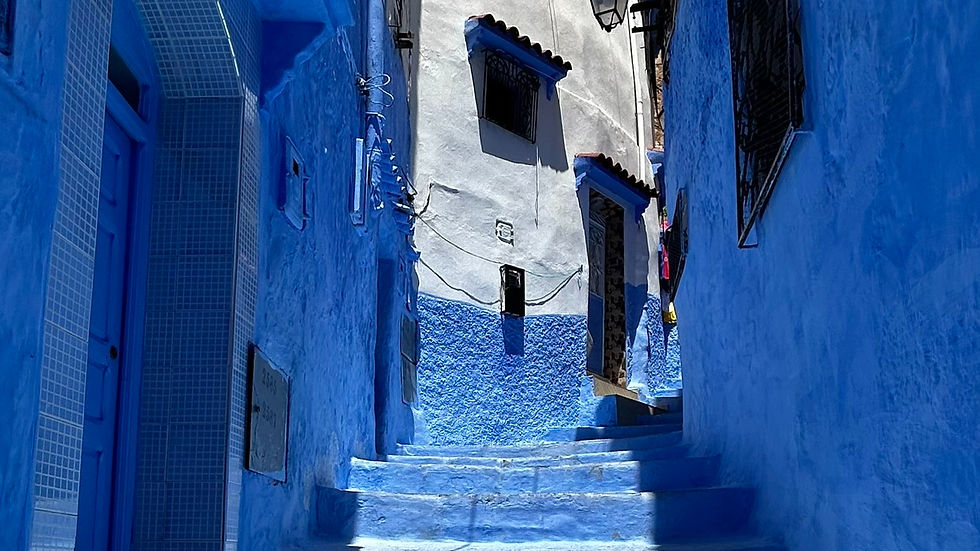
Day 2: Chefchaouen – One of the bluest cities in the world (if such a comparison exists 😊). It's very small and not worth staying overnight. You can do a day trip from Fez instead.
Day 3: Sahara – Home to the giant Erg Chebbi desert and the highlight of the trip. A definite must-visit. However, if you're coming from Fez as we did, the first day is spent mostly on the road. You do make a few quick stops in Ziz Valley and Azrou Forest along the way. The evening is spent camping in the desert, which is gorgeous.
Day 4: Sahara – A magical sunrise experience in the middle of the desert. The morning is spent at camp before heading towards Marrakech. Since a 2-day Sahara trip is mostly spent traveling, allocating 3 days is recommended.
Day 5: Marrakech – A vibrant city that combines historic souks with beautiful gardens. Very different from Fez and larger as well. It has a bazaar and an old town, but also beautiful gardens and sights associated with Yves Saint Laurent.
Day 6: Marrakech – A city with enough attractions to easily fill another day. Spend the day explorinG the remaining sights Marrakech has to offer.
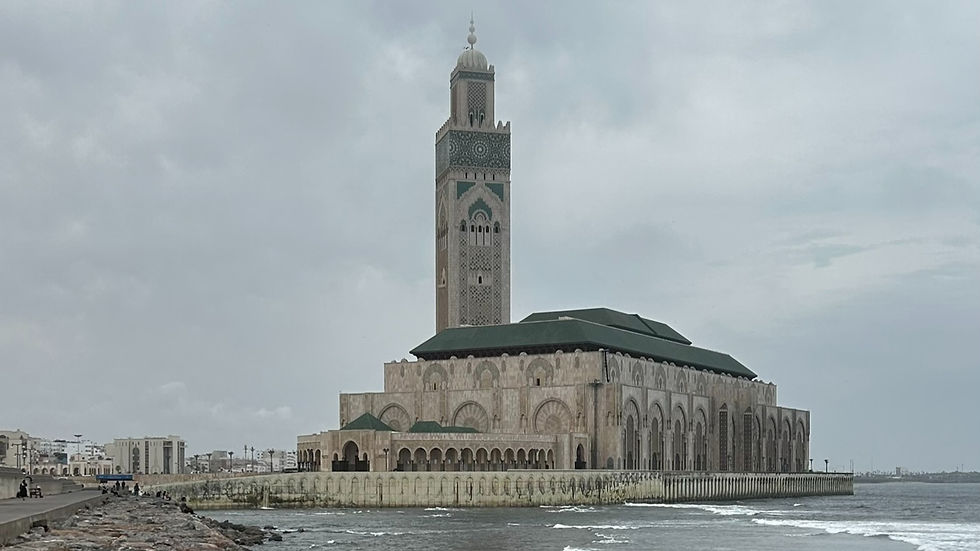
Day 7: Casablanca – Morocco's largest city. Casablanca itself is not a particularly pretty city, and there isn't much to see. The main sights are the mosque and the seaside, both of which are indeed beautiful. I got recommendations to visit Essaouira; you might want to go for it instead..
✍🏻 Itinerary
The order of each day is designed as a walking route, so you can follow it directly.
Day 1: Fez
Royal Palace of Fez (Dar al-Makhzen) – massive golden gates and exterior landmark of the royal residence
Mellah – historic Jewish quarter of Fez, known for its different architecture, wider streets, and quieter atmosphere compared to the main medina
Bab Boujloud (Blue Gate) – main entrance into the medina and iconic starting point with blue and green tilework marking the old city
Bou Inania Madrasa – one of the most beautiful Marinid-era schools in Morocco, famous for its carved cedar wood, stucco, and detailed zellij tilework
Break at Cafe Clock – cultural café known for its famous clock (inside the space)
Talaa Street (Talaa Kebira & Seghira) – main street of the medina
Nejjarine Fountain – richly decorated mosaic fountain located in a lively artisan square
Funduq al-Najjariyyin – historic merchant inn (caravanserai) that reflects traditional Fez trade architecture and courtyard design
Attarine Madrasa – an Islamic school known for its intimate scale and extremely detailed decoration
Al-Qarawiyyin Mosque and University – spiritual and intellectual heart of Fez and one of the oldest continuously operating universities in the world
Place Seffarine – open square filled with copper artisans actively hammering metal
Chouara Tannery – iconic leather dye pits where hides are processed using traditional methods; best experienced from rooftop terraces above (be warned: smells super bad)
Dinner at Dar Roumana
Accommodation at Fes
Bonus locations if you have the time (we didn't visit):
Borj Sud / panoramic viewpoint (10- 15 min walk uphill) – Best wide-angle view over the entire medina rooftops
Nejjarine Museum of Wooden Arts and Crafts – museum inside a restored caravanserai showcasing traditional Moroccan woodwork, tools, and craftsmanship
Day 2: Chefchaouen
A day tour from Fez (Around 4 hours from Fez to Chefchaouen)
Bab El Ain / Medina Entrance Gate – main entry point into Chefchaouen’s blue medina area
Chefchaouen Medina – overall blue-washed old town filled with narrow alleys, staircases, and hidden corners; the main experience is wandering without a fixed route
Souika Quarter (Blue Alleys) – the most photogenic part of the medina, known for narrow blue streets, flower pots, stairways, and iconic Instagram spots (it's inside the medina)
Kasbah Museum of Chefchaouen – restored fortress with a small museum, gardens, and a tower with views over the medina
Break at Plaza Uta el-Hammam – main square of the medina with cafés and restaurants
Local artisan souks – small traditional shops selling woven blankets, wool garments, leather goods, and handmade crafts
Grand Mosque Chefchaouen – central mosque next to the main square with its distinctive octagonal minaret
Dinner back in Fes at Dar Hatim
Accommodation at Fes
Bonus locations if you have the time (we didn't visit):
Spanish Mosque (Mosquée Bouzâafar) – hilltop viewpoint reached by a 30–45 minute hike, offering the best sunset panoramic view over the entire blue city
Ras El Maa Waterfall – small natural spring at the edge of the medina where locals gather and wash clothes; peaceful break from the blue streets
Day 3: Desert
2-day tour with below stops:
Ifrane Lion Statue – famous stone lion monument in what is called the “Switzerland of Morocco” (nothing looks like Switzerland , other than the fact they both have the lion statues)
Ifrane National Park (Azrou Cedar Forest / Barbary Macaques area) – cedar forest where you can see wild Barbary macaques (often called monkey forest. we really had fun feeding them)
Ziz Valley – dramatic palm-filled canyon with long oasis views
Erg Chebbi dunes – arrival point at the edge of the Sahara with massive sand dunes
Camel ride into the desert camp – desert trek on camels across the sand dunes toward your desert camp (amazing experience!)
Sahara Desert Camp – overnight stay in Berber-style tents with dinner, music, and desert atmosphere under the stars (amazing experience!)
Accommodation at Desert Camp
Day 4: Desert
2-day tour with below stops:
Sahara Desert Camp – overnight camp in the dunes where you wake up surrounded by the Sahara
Sunrise over the Erg Chebbi dunes – early morning desert sunrise viewed directly from the camp area
Breakfast at desert camp – traditional breakfast served in the camp before departure
Camel ride back to Merzouga base – return ride across the dunes from the camp back to the meeting point
Merzouga - Marrakech road trip – long drive out of the Sahara heading toward the Atlas Mountains and Marrakech at the end
Dinner in Marrakech at Café Des Épices – rooftop restaurant in the Marrakech medina, popular for sunset views over the old city rooftops
Accommodation at Marrakech
Bonus location if you have the time: I would have loved to see it, but it’s hard to do on a 2-day trip (I think you need a 3-day desert tour for this).
Aït Benhaddou – UNESCO ksar (fortified village) and famous film location
Atlas Studios – large film studio used for Hollywood desert movies
Kasbah Taourirt – historic fortified kasbah in Ouarzazate
Ouarzazate City – desert gateway city known as the “Hollywood of Africa”
Day 5: Marrakech
Bahia Palace – a 19th-century royal palace in Marrakech renowned for its ornate Moroccan architecture, courtyards, and garden (best to visit early morning, before crowds)
The Mellah – Jewish quarter with synagogues, old streets, and a quieter traditional neighborhood feel
Badi Palace – the grand ruin of a 16th-century Saadian palace, famous for its vast courtyards and historic remains (we didnt't go in, as we are not really interested in ruins)
Saadian Tombs – beautifully decorated royal tomb complex from the Saadian dynasty (ticket required, limited hours, closes early afternoon)
Bab Agnaou – historic gate into the old city, one of Marrakech’s most important medieval entrances
Kasbah Quarter – quieter historic district with old royal and military architecture
Koutoubia Mosque – Marrakech’s most iconic landmark with its famous minaret
Medina (Old Town exploration) – wandering through streets, hidden alleys, and traditional souk areas
Jemaa el-Fnaa – main square of Marrakech with street food, performers, and constant evening energy
Souk Semmarine – main artery of the Marrakech souks filled with spices, textiles, leather, and crafts
Dinner at Le Jardin – calm garden restaurant inside the medina, good contrast to the chaos of the souks
Accommodation at Marrakech
Day 6: Marrakech
Morning:
Jardin Majorelle – iconic blue garden designed by Jacques Majorelle and later rescued, restored, and preserved by Yves Saint Laurent and Pierre Bergé after they purchased it in 1980
Yves Saint Laurent Museum – fashion museum next to Majorelle dedicated to Yves Saint Laurent
Afternoon:
Break at Bacha Coffee – famous historic café inside Dar El Bacha known for its elegant courtyard and specialty Arabica coffees
Le Jardin Secret – restored riad garden in the medina offering peaceful greenery and architecture (amazing space!)
Ben Youssef Madrasa – one of the most beautiful Islamic schools in Morocco, famous for its geometric design and courtyard
Dinner at L’Mida / M Rooftop – modern rooftop dining with views over the medina
Accommodation at Marrakech
Day 7: Casablanca
Breakfast at Holybrunch
Hassan II Mosque – the city’s most iconic landmark and one of the largest mosques in the world; non-Muslims can only enter with a guided tour at specific times, so timing matters (dress modestly, guided entry required for interior visit)
Atlantic Ocean Corniche Walk – coastal promenade walk along the ocean with sea views
Old Medina of Casablanca – compact historic quarter with narrow streets, local shops, and a more authentic, less tourist-polished feel
Place Mohammed V – central colonial-era square surrounded by French architecture and administrative buildings (often included in walking tours)
Habous Quarter (New Medina) – planned “new medina” built in the French protectorate era, known for artisan shops, bakeries, and calmer streets than the old medina
Notre-Dame de Lourdes Church – modernist cathedral famous for its stained glass and architecture
Dinner at La Sqala – traditional restaurant set inside a historic fortress-style garden space near the medina
Drinks at Rick's Café Casablanca – atmospheric restaurant designed after the film Casablanca
Accommodation at Casablanca
What to Eat in Morocco
Tagine – Slow-cooked stew made with meat, vegetables, and spices, prepared in a traditional clay pot (I tried this)
Mint tea – Sweet green tea with fresh mint, served as a symbol of Moroccan hospitality (I tried this)
Kefta tagine – Meatballs cooked in a rich tomato sauce, often topped with eggs (I tried this)
Msemen – Flaky, square Moroccan pancake, crispy outside and soft inside, served sweet or savory (I tried this)
Harira – Hearty soup with lentils, chickpeas, tomatoes, and herbs, especially popular during Ramadan (I tried this)
Couscous – Steamed semolina grains topped with vegetables, chickpeas, and meat, traditionally eaten on Fridays (I tried this)
Zaalouk – Smoky eggplant and tomato dip with garlic, olive oil, and spices, served with bread (I tried this)
Pastilla – Sweet and savory pie made with thin pastry, filled with meat, almonds, cinnamon, and sugar (I tried this)
Brochettes – Grilled meat skewers, commonly sold as street food (I tried this)
Berber omelet – Eggs cooked with tomatoes, onions, and spices, served in a tagine (I tried this)
Nous nous – Half espresso, half milk, similar to a latte (I tried this)
Moroccan spiced coffee – Coffee flavored with spices like cinnamon and cardamom
Mechoui – Slow-roasted lamb, tender and lightly seasoned
Ktefa – Dessert made with crispy pastry or vermicelli, layered with cream and topped with sugar and almonds
Fish chermoula – Fish marinated in a mix of herbs, garlic, lemon, and spices, then grilled or baked
📢 Essential tips
Here’s everything you need to plan your week in Morocco:
What is the best time to visit Morocco?
The best time to visit Morocco is in spring (March–May) or autumn (September–November), when the weather is warm but comfortable for exploring cities, mountains, and the desert. It tends to get super hot in summer.
What to wear in Morocco?
Depends on when you go, Moroccan cities can get very hot. But at the same time, it’s a Muslim country, so it’s better to respect local norms and dress somewhat modestly. This can also matter when visiting religious sites. I usually opted for pants (like lightweight trousers) and a regular short-sleeve t-shirt. On days when I planned to visit a mosque, I also carried a scarf to easily cover my head and shoulders.
How to pay in Morocco?
It’s required to have cash and good to have local currency. Euros are sometimes accepted, but the exchange rate is usually not in your favor. Credit cards are widely accepted in hotels, airports, and nicer restaurants, but in the medinas and street shops, cash is essential.
Bargaining is the norm. Start at around 40–50% of the initial price and you’ll usually end up somewhere in the middle.
How to comute in Morocco?
For in-city travels - there is no Uber in Morocco, but there is Careem. Careem charged us around €25 to the train station, while regular taxis asked for €120. For the travel between cities - The train network between major cities is quite good. We traveled from Marrakech to Casablanca by train and had a smooth experience.
Is it safe in Morocco?
I saw many solo women travelers. However, given the high number of men working in the streets and how persistent they can be when trying to sell something, it doesn’t always feel completely comfortable as a woman, especially at night and particularly in Fez or Casablanca. Marrakech felt more touristic and safer.
We also experienced some common tricks - like people saying a street is closed and then asking for money to show you the “correct” way. So just be aware. Although people are very nice and chatty, there is often a sales angle. At one point we thought we were just having a friendly conversation, and suddenly found ourselves buying spices in their “recommended” shop.
Where to stay in Morocco?
We booked riads through Booking.com (please check the links below). Most places have very high ratings, so it can be hard to tell which ones are truly great. We were very happy with ours, so you can go ahead with those if you like.
How long to spend in Moroccan desert ?
We needed a 2-day tour that would take us from Fez and drop us off in Marrakech, so there weren’t many options that checked all the boxes. If you have the time, I recommend allocating 3 days for the desert. 2 days feels like too much of a road trip since the distances are quite large, and with 3 days you can also see additional sights that we missed.
What are the desert camps like?
The camp we stayed in was very luxurious; the tent was better than many hotel rooms. It does get quite cold in the evening and at sunrise, so bring a jacket. Friends who stayed in other camps said they were quite cold at night, while ours had heating/AC, so it really depends on the level of comfort of the camp you book.
How to navigate / find way?
We usually used Google Maps, and it worked well in all cities except the Fez medina. We did get lost and couldn’t find our hotel at one point, so we had to call them to come pick us up. So try to remember your route like Hansel and Gretel - technology doesn’t help much in Fez.
🔗 All travel links
Accommodation:
Accommodation in Fes - You can book here
Accommodation in Marrakech - You can book here
Accommodation in Casablanca - You can book here
Tours:
2-Day Desert Tour - Ours is not available anymore, but we booked from here
Chefchaouen day tour from Fez - You can book here
Marrakech walking tour - You can book here
Casablanca Hassan II Mosque Guided Tour - You can book here
📲 Find it on social media!
Scroll right to see more

Comments